So... I sort of abandoned ship for awhile. I don't really have an explanation for that. So... sorry? *holds out apology cookies*
Fourth year has been a whirlwind. Here's a rundown...
- My plans for a lab animal residency? Down in flames, up in smoke. I actually opted to withdraw from the Match in mid-January. I had no interview offers and knew I had to make a decision to pursue other things, so I opted to withdraw and started applying to private practices. If there's one thing I've learned in fourth year, it's that I actually do like dealing with clients. I wanted to do small animal and equine (I like cows, they just have zero respect for me and we're best off remaining friends, rather than colleagues). After a few applications around Nova Scotia, I've managed to land a position at a clinic doing small animal and exotics, with the possibility of equine in the future. I'm nervous, but excited for May.
- I passed the NAVLE. It was a good day when I found out. There was wine.
- I'm reasonably proficient in basic surgery. I certainly won't graduate with the most experience, but I feel I have a decent base I can build on, at least the basic stuff like spays and neuters. And really, that's as far as I want to go with surgery. It's just not my bag.
- Speaking of which, I'm currently on companion animal surgery. Not my favourite. Luckily, all the ridiculous weather meant that we missed the better part of a full week of the rotation and that's fine with me.
- Like the title says, just 3 more months, give or take. Actually, that's until graduation. In terms of rotations, it's (eep) 8 weeks. Two more weeks of surgery, then three weeks of diagnostic services and then I'm off to Louisiana for a three week externship at the Tulane National Primate Research Center. Yeah, I'm stoked. Admittedly, it's going to be kind of a working vacation.
- I acquired another cat. You know, because. He came out of a hoarding situation with 100+ cats. He's just about a year old now, I got him in December. And he's kind of a jerk-butt. He doesn't mean to be a jerk-butt. But he's a young boy cat and just can't help himself; their default setting is jerk-butt.
Saturday, February 21, 2015

Wednesday, June 11, 2014
I'm fine.
John Bridger: How do you feel?
Charlie Croker: [shrugging] I'm fine.
John Bridger: Fine? You know what "fine" stands for, don't you?
Charlie Croker: Yeah, unfortunately.
John Bridger: Freaked out...
Charlie Croker: Insecure...
John Bridger: Neurotic...
Charlie Croker: And Emotional.
With the above definition, I have mostly been "fine" on this rotation. I'm either freaked out about a procedure I have to do (often with the client watching me), insecure about my answers at morning rounds, neurotic about over-analyzing my patient exams (is this normal? ooh, that's up a little, do I need to worry about that? why is his AST down??!), and emotional because either something fantastic has just happened or something horrible.- The Italian Job
Large animal medicine is almost over. Which means almost six weeks of my fourth year is over. This is has been substantially different from my first three weeks on fish health.
Namely, patients die.
Okay, fish die too. But it's just less emotional. From a welfare/lab animal perspective, fish suffering is no different from any other animal suffering. But whether it's societal conditioning, or just the difference in management (after all, I wasn't setting up IV lines and doing ultrasounds on the fish and the fish didn't have humans attached and names and stories), for me it's just plain sadder when a non-fish dies. (Your mileage may vary.)
People often comment to me, "Oh, I don't know how you can stand it! I just couldn't put an animal to sleep." To be honest, that's not the part that bothers me. Sure, it's sad. I screamed like a baby when my dogs were put down. I am moved seeing a clients' animal euthanized. It's a goodbye, of course it's sad. But 9 times out of 10, it's in the animal's best interest. In vet med, we can do what (most) human doctors can't. We can end suffering once and for all. We can take the pain away.
What gets me are the ones we just can't save.
Maybe we just don't know what they have. Maybe we know what they have, but we just get them too late. Maybe they just go overnight. I can't go into specifics on this blog, but we've had a rough couple days in large animal medicine with a few deaths; things that just couldn't be helped. When I came in this morning, I asked a classmate about a patient who came in yesterday. He told me he died overnight. It turned out to be a fluke thing that no one could have anticipated and even if they had, there was nothing that could have beeen done about it. But it didn't change the fact that I got irrationally angry at the universe and stood in that stall and cried. Not long, but I did. Then there was stuff to do. There's always stuff to do, but sometimes, you just need that five minutes in a dark stall to let it pass, so you can get on with the patients that are still alive and still need you.
Saturday, June 7, 2014
An Open Letter From A Senior Student On Rotations
Hello clients!
A teaching hospital is a bit of a weird environment compared with your neighbourhood vet clinic. It's a world of extremes. We have general vaccine and well puppy/kitten checks, and the most dire of chemotherapy and complicated surgery. We have tiny birds and huge draft horses. And it's the most experienced knowledgeable specialists combined with the larval forms known as senior students.
The senior student may be the first person you meet after reception. They may seem like they're reading off a script while they ask for a history because they are determined not to miss a detail. They will probably take copious notes and ask you to repeat things so everything is correct. Please be patient with us. We are learning. We haven't developed that sixth sense and intuition yet. Your regular vet may take 10 minutes to do a physical, but the senior student might take three times that. It's because we're double and triple checking in our own heads. As I am examining your animal, this is what's going through my head: Is that a crackle in that lung? Are those gut sounds increased? Are these gums pink or a little pale? Is that a murmur or just the hair on the stethoscope? Oh crap, forgot to check the joints. Temperature is 38.1, what's normal in this species? 37.2 to 38.5? Something like that? Wait, but it's a neonate, what's normal in them?
You might think we're inept. And we kind of are. But I promise you, that doesn't mean we're stupid or uncaring. Once we have consulted with our rotation clinician, 99% of us will rush off to read EVERYTHING we can get our hands on about that disease. Its mechanisms, the drugs that treat it, the side effects of those drugs, management of the disease, diagnostic tests, prognosis and complications. We'll look up differentials for that disease. We will spend hours pouring over your animal's tests results. So don't worry, and try not to be too critical of us to our faces; we may pee our pants in terror.
On the first day of this rotation, the senior clinician asked if anyone was afraid of dealing with clients. I said I was. I probably won't ever forget her advice to me: "Clients just want to know that you care." And we do. We are pet owners too. We will spend our free time grooming your animal. We will come in when we don't have to to see how they're doing. We fret about them when they aren't doing well, and we celebrate when they improve. Every morning on my large animal medicine rotation, the greeting between students isn't, "Morning, how're you?" Instead, it's, "Morning, how's your patient?" If it's a food animal or a new foal and it comes in without a name, we will give it one because we just feel connected to them (there are usually long drawn out conversations of, "Does this calf look like a Jenny or a Phoebe to you?"). If it has a name, it'll get a cutesy nickname. We treat them like they're our own.
So next time a senior student is in front of you and stumbling through the history and pestering you about vaccine history and what dewormer you used last, take a breath and be patient with them. They won't let you (or your animal) down.
A teaching hospital is a bit of a weird environment compared with your neighbourhood vet clinic. It's a world of extremes. We have general vaccine and well puppy/kitten checks, and the most dire of chemotherapy and complicated surgery. We have tiny birds and huge draft horses. And it's the most experienced knowledgeable specialists combined with the larval forms known as senior students.
The senior student may be the first person you meet after reception. They may seem like they're reading off a script while they ask for a history because they are determined not to miss a detail. They will probably take copious notes and ask you to repeat things so everything is correct. Please be patient with us. We are learning. We haven't developed that sixth sense and intuition yet. Your regular vet may take 10 minutes to do a physical, but the senior student might take three times that. It's because we're double and triple checking in our own heads. As I am examining your animal, this is what's going through my head: Is that a crackle in that lung? Are those gut sounds increased? Are these gums pink or a little pale? Is that a murmur or just the hair on the stethoscope? Oh crap, forgot to check the joints. Temperature is 38.1, what's normal in this species? 37.2 to 38.5? Something like that? Wait, but it's a neonate, what's normal in them?
You might think we're inept. And we kind of are. But I promise you, that doesn't mean we're stupid or uncaring. Once we have consulted with our rotation clinician, 99% of us will rush off to read EVERYTHING we can get our hands on about that disease. Its mechanisms, the drugs that treat it, the side effects of those drugs, management of the disease, diagnostic tests, prognosis and complications. We'll look up differentials for that disease. We will spend hours pouring over your animal's tests results. So don't worry, and try not to be too critical of us to our faces; we may pee our pants in terror.
On the first day of this rotation, the senior clinician asked if anyone was afraid of dealing with clients. I said I was. I probably won't ever forget her advice to me: "Clients just want to know that you care." And we do. We are pet owners too. We will spend our free time grooming your animal. We will come in when we don't have to to see how they're doing. We fret about them when they aren't doing well, and we celebrate when they improve. Every morning on my large animal medicine rotation, the greeting between students isn't, "Morning, how're you?" Instead, it's, "Morning, how's your patient?" If it's a food animal or a new foal and it comes in without a name, we will give it one because we just feel connected to them (there are usually long drawn out conversations of, "Does this calf look like a Jenny or a Phoebe to you?"). If it has a name, it'll get a cutesy nickname. We treat them like they're our own.
So next time a senior student is in front of you and stumbling through the history and pestering you about vaccine history and what dewormer you used last, take a breath and be patient with them. They won't let you (or your animal) down.
Thursday, March 20, 2014
BToW: Down Time
"What do you like to do outside of school?"
Regardless of what you may hear, vet students don't spend every waking minute either at school or studying. You just CAN'T. You'd burn out and/or go postal before the end of first semester. Sure, we study a lot. We spend a lot of time at school. I have had 12 hour days at school and that was before adding on any extra studying I had to do that night, and I'm not even on clinics yet. So what do we do to retain our sanity? We must have other interests, right?
Well DUH.
I'm probably one of the biggest nerds you'll ever meet. Science fiction, fantasy, video games, I'm a massive Japan-o-phile (in case previous posts haven't tipped you off). I'm not a huge table-top game person, mostly because I suck at them (Who has two thumbs and could lose to a toddler at Settlers of Catan? This girl.)
Doctor Who and Orphan Black (Season 2 April 19!!) take up way too much of my time. I have not one, but two sonic screwdrivers. And I currently have a Tuesday night date every week with Face Off on Space (the Canadian version of SyFy). I'm always glad that exams end as the summer blockbuster season is ramping up. Captain America: The Winter Soldier, Guardians of the Galaxy, X-Men: Days of Future Past, The Amazing Spiderman 2... I will manage to fit in all of these around clinical rotations somehow.
I've actually lost track of how many anime/manga series I've followed through my life. It started when I was a little kid, though I didn't know that's what it was when I was watching Astro Boy. Then Sailor Moon (which I would end up re-watching as an adult to catch all the stuff that was horribly edited out), and in no particular order: Pokemon, Digimon, Mobile Suit Gundam Wing (don't judge me), Tenjou Tenge, Outlaw Star, The Demon Ororon, Chrome Shelled Regios, Darker than Black, Devil May Cry, Princess Mononoke, Yu-Gi-Oh, and most recently, Shingeki no Kyojin/Attack on Titan. I'm probably missing some in there too, but those are the ones that immediately come to mind. Because there's nothing like watching people get devoured by huge titans to remind you that maybe studying chicken viruses isn't so bad.
Addition Japanese obsessions: cosplay, geiko and maiko, food, kimono (I own 10, I think), lolita fashion, J-pop and J-rock, and I own a cheap katana.
Lest you think I'm a typical pasty stuck inside gamer geek (okay, I am pasty...), I am reasonably active. I've been running since December, and I'm doing my first 5k in April, and I've been an avid horseback rider since high school, though sadly separated from my horse since vet school started. I don't play hockey, but I do watch it. Go Penguins!
As you can tell from my blog background, I love the sea. Tall ships, pirates, anything to do with the sea-faring days of yore. I grew up on the Atlantic surrounded by that and I can't imagine living somewhere that I couldn't drive to the ocean in a couple hours.
Finally, as many of my classmates can tell you, I bake. Usually while I'm procrastinating.
Regardless of what you may hear, vet students don't spend every waking minute either at school or studying. You just CAN'T. You'd burn out and/or go postal before the end of first semester. Sure, we study a lot. We spend a lot of time at school. I have had 12 hour days at school and that was before adding on any extra studying I had to do that night, and I'm not even on clinics yet. So what do we do to retain our sanity? We must have other interests, right?
Well DUH.
I'm probably one of the biggest nerds you'll ever meet. Science fiction, fantasy, video games, I'm a massive Japan-o-phile (in case previous posts haven't tipped you off). I'm not a huge table-top game person, mostly because I suck at them (Who has two thumbs and could lose to a toddler at Settlers of Catan? This girl.)
Doctor Who and Orphan Black (Season 2 April 19!!) take up way too much of my time. I have not one, but two sonic screwdrivers. And I currently have a Tuesday night date every week with Face Off on Space (the Canadian version of SyFy). I'm always glad that exams end as the summer blockbuster season is ramping up. Captain America: The Winter Soldier, Guardians of the Galaxy, X-Men: Days of Future Past, The Amazing Spiderman 2... I will manage to fit in all of these around clinical rotations somehow.
I've actually lost track of how many anime/manga series I've followed through my life. It started when I was a little kid, though I didn't know that's what it was when I was watching Astro Boy. Then Sailor Moon (which I would end up re-watching as an adult to catch all the stuff that was horribly edited out), and in no particular order: Pokemon, Digimon, Mobile Suit Gundam Wing (don't judge me), Tenjou Tenge, Outlaw Star, The Demon Ororon, Chrome Shelled Regios, Darker than Black, Devil May Cry, Princess Mononoke, Yu-Gi-Oh, and most recently, Shingeki no Kyojin/Attack on Titan. I'm probably missing some in there too, but those are the ones that immediately come to mind. Because there's nothing like watching people get devoured by huge titans to remind you that maybe studying chicken viruses isn't so bad.
Addition Japanese obsessions: cosplay, geiko and maiko, food, kimono (I own 10, I think), lolita fashion, J-pop and J-rock, and I own a cheap katana.
Lest you think I'm a typical pasty stuck inside gamer geek (okay, I am pasty...), I am reasonably active. I've been running since December, and I'm doing my first 5k in April, and I've been an avid horseback rider since high school, though sadly separated from my horse since vet school started. I don't play hockey, but I do watch it. Go Penguins!
As you can tell from my blog background, I love the sea. Tall ships, pirates, anything to do with the sea-faring days of yore. I grew up on the Atlantic surrounded by that and I can't imagine living somewhere that I couldn't drive to the ocean in a couple hours.
Finally, as many of my classmates can tell you, I bake. Usually while I'm procrastinating.
Saturday, March 15, 2014
BToW: The Importance of Diagnostics
"What has been the most interesting case you have seen?"
I'm actually going to talk about my own dog here. 1) Because I can tell you everything without running afoul of confidentiality stuff and 2) because her case nicely illustrates why your vet wants to spend more of your money on things like bloodwork. For all you vet students and/or pre-vets and/or armchair vets, here's your case!
So, meet Baby.
 June 2012:
Signalment: 13 year old female spayed Valley Bulldog.
History: Presented for a geriatric pet wellness exam. Lives with an indoor/outdoor cat. No real complaints from owners. Eating, drinking, urinating and defecating normally. Eating a grain-free store bought dry diet, some table scraps. Vaccines not up to date, had her puppy series, but nothing since. Dewormed a few times a year. Dog aggressive, kept away from other dogs at all times, except for an occassional visit from with the owner's daughter (my sister) who has a 2 year old Chihuahua, who is up to date on vaccines.
Physical exam findings: Good condition, 18kg, not over or underweight, some dental calculus, some dandruff, heart and lung ascultation normal, TPR normal. Mild opacity in eye but doesn't seem to cause problems (probably normal age related change and not cataracts.) Slight pot-bellied appearance, but she's a bulldog.
Owner's daughter is a vet student (c'est moi, duh) and wants a geriatric blood panel done. Results below with normals in parantheses)
WBC: 8.68 x 10^9/l (6-17)
LYM: 1.46 x 10^9/l (1-4.8)
MON: 0.46 x 10^9/l (0.2-1.5)
NEU: 6.50 x 10^9/l (3-12)
EOS: 0.18 x 10^9/l (0-0.8)
BAS: 0.08 x 10^9/l (0-0.4)
LY%: 16.8% (12-30)
MO%: 5.3% (2-4)
NE%: 74.8% (62-87)
EO%: 2.1% (0-8)
BA%: 0.9% (0-2)
RBC: 5.98 x 10^12/l (5.5-8.5)
HGB: 15.5 g/dl (12-18)
HCT: 43.25% (37-55)
MCV: 72 fl (60-77)
MCH: 26 pg (19.5-24.5)
MCHC: 35.9 g/dl (31-34)
PLT: 406 x 10^9/l (200-500)
ALB: 48 g/l (25-44)
ALP: 964 U/l (20-150)
ALT: 154 U/l (10-118)
AMY: 793 U/l (200-1200)
BUN: 7.4 mmol/l (2.5-8.9)
CA: 3.15 mmol/l (2.15-2.95)
PHOS: 1.68 mmol/l (0.94-2.13)
CRE: 87 umol/l (27-124)
GLU: 5.4 mmol/l (3.3-6.1)
NA+: 144 mmol/l (138-160)
TP: 75 g/l (54-62)
GLOB: 27 g/l (23-52)
A few abnormalities. The big glaring one is the ALP. She's not on steroids or anti-convulsants, she's certainly not a young growing animal, so the other big differential is hyperadrenocorticism (Cushing's). It sort of fits with her bad skin and pot-belly and with the old female signalment, but she's not the classic polyuric/polydipsic Cushing's dog. The monocytosis could be due to that too, but with no lymphopenia, we can't call it a stress leukogram (most offten associated with stress, or with steroids whether exogenous or endogenous).One of the biggest causes of high calcium is humoral hypercalcemia of malignancy; basically some tumors have this weird ability to secrete something called parathyroid hormone related protein (peptide? something that starts with p). The parathyroid gland takes this as a signal that the body is low in calcium, even though it isn't. So it increases calcium by taking it from the bones. One of the most common types of tumor that does this is perianal gland adenocarcinomas. A rectal exam was done, with no masses found.
The rule is, if you don't have a strong suspicion of Cushing's don't test for it, due to the high rate of false positives and the cost of testing. Baby's owners are told to watch for signs and bring her back if they see other signs. Until then, she's put on an EFA supplement to manage her skin problems.
December 2013:
Baby comes back, this time with a presenting complaint of (you guessed it) polyuria and polydipsia. She'd happily drain the bathtub if you let her and her urine looks basically the same coming out as going in. Could be diabetes mellitus, could be a progression of her suspected Cushing's. Oh, and she's had a couple episodes of impacted anal glands. Vet knows that money is a concern and provided the bloodwork doesn't show anything else weird, he's willing to start her on trilostane or mitotane for the Cushing's without doing all the expensive hormonal testing, since vet student daughter is home on winter break and can be in contact with him every few days and monitor the dog closely.
The bloodwork shows no diabetes mellitus, but does show the calcium is high; higher than it was a year and a half ago. It's now at 3.5. Vet does a rectal exam and... there's a small mass.
Given her age, the owners opted for palliative care and treating her polyuria/polydipsia with furosemide to bring the calcium down. She got a few more good weeks, and was euthanized in early February 2014.
The moral: Do the diagnostics. They aren't just to run up the bill.
I'm actually going to talk about my own dog here. 1) Because I can tell you everything without running afoul of confidentiality stuff and 2) because her case nicely illustrates why your vet wants to spend more of your money on things like bloodwork. For all you vet students and/or pre-vets and/or armchair vets, here's your case!
So, meet Baby.
Signalment: 13 year old female spayed Valley Bulldog.
History: Presented for a geriatric pet wellness exam. Lives with an indoor/outdoor cat. No real complaints from owners. Eating, drinking, urinating and defecating normally. Eating a grain-free store bought dry diet, some table scraps. Vaccines not up to date, had her puppy series, but nothing since. Dewormed a few times a year. Dog aggressive, kept away from other dogs at all times, except for an occassional visit from with the owner's daughter (my sister) who has a 2 year old Chihuahua, who is up to date on vaccines.
Physical exam findings: Good condition, 18kg, not over or underweight, some dental calculus, some dandruff, heart and lung ascultation normal, TPR normal. Mild opacity in eye but doesn't seem to cause problems (probably normal age related change and not cataracts.) Slight pot-bellied appearance, but she's a bulldog.
Owner's daughter is a vet student (c'est moi, duh) and wants a geriatric blood panel done. Results below with normals in parantheses)
WBC: 8.68 x 10^9/l (6-17)
LYM: 1.46 x 10^9/l (1-4.8)
MON: 0.46 x 10^9/l (0.2-1.5)
NEU: 6.50 x 10^9/l (3-12)
EOS: 0.18 x 10^9/l (0-0.8)
BAS: 0.08 x 10^9/l (0-0.4)
LY%: 16.8% (12-30)
MO%: 5.3% (2-4)
NE%: 74.8% (62-87)
EO%: 2.1% (0-8)
BA%: 0.9% (0-2)
RBC: 5.98 x 10^12/l (5.5-8.5)
HGB: 15.5 g/dl (12-18)
HCT: 43.25% (37-55)
MCV: 72 fl (60-77)
MCH: 26 pg (19.5-24.5)
MCHC: 35.9 g/dl (31-34)
PLT: 406 x 10^9/l (200-500)
ALB: 48 g/l (25-44)
ALP: 964 U/l (20-150)
ALT: 154 U/l (10-118)
AMY: 793 U/l (200-1200)
BUN: 7.4 mmol/l (2.5-8.9)
CA: 3.15 mmol/l (2.15-2.95)
PHOS: 1.68 mmol/l (0.94-2.13)
CRE: 87 umol/l (27-124)
GLU: 5.4 mmol/l (3.3-6.1)
NA+: 144 mmol/l (138-160)
TP: 75 g/l (54-62)
GLOB: 27 g/l (23-52)
A few abnormalities. The big glaring one is the ALP. She's not on steroids or anti-convulsants, she's certainly not a young growing animal, so the other big differential is hyperadrenocorticism (Cushing's). It sort of fits with her bad skin and pot-belly and with the old female signalment, but she's not the classic polyuric/polydipsic Cushing's dog. The monocytosis could be due to that too, but with no lymphopenia, we can't call it a stress leukogram (most offten associated with stress, or with steroids whether exogenous or endogenous).One of the biggest causes of high calcium is humoral hypercalcemia of malignancy; basically some tumors have this weird ability to secrete something called parathyroid hormone related protein (peptide? something that starts with p). The parathyroid gland takes this as a signal that the body is low in calcium, even though it isn't. So it increases calcium by taking it from the bones. One of the most common types of tumor that does this is perianal gland adenocarcinomas. A rectal exam was done, with no masses found.
The rule is, if you don't have a strong suspicion of Cushing's don't test for it, due to the high rate of false positives and the cost of testing. Baby's owners are told to watch for signs and bring her back if they see other signs. Until then, she's put on an EFA supplement to manage her skin problems.
December 2013:
Baby comes back, this time with a presenting complaint of (you guessed it) polyuria and polydipsia. She'd happily drain the bathtub if you let her and her urine looks basically the same coming out as going in. Could be diabetes mellitus, could be a progression of her suspected Cushing's. Oh, and she's had a couple episodes of impacted anal glands. Vet knows that money is a concern and provided the bloodwork doesn't show anything else weird, he's willing to start her on trilostane or mitotane for the Cushing's without doing all the expensive hormonal testing, since vet student daughter is home on winter break and can be in contact with him every few days and monitor the dog closely.
The bloodwork shows no diabetes mellitus, but does show the calcium is high; higher than it was a year and a half ago. It's now at 3.5. Vet does a rectal exam and... there's a small mass.
Given her age, the owners opted for palliative care and treating her polyuria/polydipsia with furosemide to bring the calcium down. She got a few more good weeks, and was euthanized in early February 2014.
The moral: Do the diagnostics. They aren't just to run up the bill.
Thursday, March 6, 2014
BToW: Why I chose the Gentle Island
"How did you choose which school to attend? What things do you like and dislike about your school's location?"
Well, I didn't. The system in Canada is a little different from in the USA. There's only 5 colleges in Canada and one is francophone. The system is strictly regional. In the USA, many (all?) schools take out of state students. They have a smaller chance of getting in compared with in state and they pay higher tuition, but they can apply. In Canada, you can't. If I were to apply to Saskatchewan, or Alberta, or Ontario, as far as I know, they wouldn't even look at my application. This was very frustrating after my first rejection from AVC; I can't tell you how many people told me to apply to Ontario.
There are other options; we can apply to any American school and the overseas ones (Edinburgh, Dublin, etc) and the caribbean schools. But you need seriously deep pockets. In the USA, students are guaranteed the cost of attendance in loans for accredited schools (as is my understanding). In Canada, no such luck. Between federal and provincial government loans, I can get just over $14,000 a year; and banks are pretty tight fisted. Tuition at the other schools starts at $30,000 a year and goes up.
So it was AVC or bust.
My standard response when people ask me if I like the island is, "I love AVC. I hate PEI." Don't get me wrong, PEI suits some people very well. It's pretty in the summer, there are some great restaurants in Charlottetown and there's all kinds of festivals and events during the tourist season. The faculty at AVC are great. Additional benefits are that it's still in Canada, and it's the closest option to my parents' house. I can be home in about 5 hours. Oh, and I can still get cheap lobster and really good fish and chips.
But it's small. Really small. I did most of my undergraduate studies in Halifax, NS and I am very much a Haligonian* at heart. While Halifax is hardly a metropolis itself, I am constantly comparing Charlottetown to a city 10 times the size. It's less diverse. It's less convenient. It's less walkable. The public transit is one step above non-existent. Things close early. Mail is slow here. Electricity is expensive. Hell, everything is expensive on account of needing to be brought from the mainland. There is no Second Cup. I once needed dental wax at 12:30 on a Saturday night**. In Halifax, I ran down to the 24 hour pharmacy. Here, I would have been stuck until noon the next day.
And the weather. May-September is pretty nice. It can get into the 30C+ range (often 35+ with the humidex), but usually it's good. But winter does not screw around. I wasn't prepared. Everyone said, "Oh, it's so windy!" Really, the wind is no worse that Halifax. But the temperature difference? And the snow difference? No one mentioned those!
If you like small towns, don't mind snow and cold, and like seafood and potatoes, give PEI some consideration. If you can't, then do what I couldn't, and apply somewhere else.
With all of that said... If I could apply anywhere, I probably still would have ended up at AVC. Finances just made anywhere outside of Canada unfeasible, and besides, I love my country and I'm reluctant to leave it. My dad was a stroke survivor and not in great shape when I matriculated. My mom isn't that severe, but isn't the healthiest of people. So I'd be really reluctant to go anywhere that I couldn't get home easily and quickly. For me, the convenience factor outweighs the other stuff.
*Isn't that a great word? No one knows where it came from.
**Tooth broke while watching a movie and eating a Skor bar at home. It left a sharp point that I kept scratching my tongue on. Nothing weird.
Well, I didn't. The system in Canada is a little different from in the USA. There's only 5 colleges in Canada and one is francophone. The system is strictly regional. In the USA, many (all?) schools take out of state students. They have a smaller chance of getting in compared with in state and they pay higher tuition, but they can apply. In Canada, you can't. If I were to apply to Saskatchewan, or Alberta, or Ontario, as far as I know, they wouldn't even look at my application. This was very frustrating after my first rejection from AVC; I can't tell you how many people told me to apply to Ontario.
There are other options; we can apply to any American school and the overseas ones (Edinburgh, Dublin, etc) and the caribbean schools. But you need seriously deep pockets. In the USA, students are guaranteed the cost of attendance in loans for accredited schools (as is my understanding). In Canada, no such luck. Between federal and provincial government loans, I can get just over $14,000 a year; and banks are pretty tight fisted. Tuition at the other schools starts at $30,000 a year and goes up.
So it was AVC or bust.
My standard response when people ask me if I like the island is, "I love AVC. I hate PEI." Don't get me wrong, PEI suits some people very well. It's pretty in the summer, there are some great restaurants in Charlottetown and there's all kinds of festivals and events during the tourist season. The faculty at AVC are great. Additional benefits are that it's still in Canada, and it's the closest option to my parents' house. I can be home in about 5 hours. Oh, and I can still get cheap lobster and really good fish and chips.
But it's small. Really small. I did most of my undergraduate studies in Halifax, NS and I am very much a Haligonian* at heart. While Halifax is hardly a metropolis itself, I am constantly comparing Charlottetown to a city 10 times the size. It's less diverse. It's less convenient. It's less walkable. The public transit is one step above non-existent. Things close early. Mail is slow here. Electricity is expensive. Hell, everything is expensive on account of needing to be brought from the mainland. There is no Second Cup. I once needed dental wax at 12:30 on a Saturday night**. In Halifax, I ran down to the 24 hour pharmacy. Here, I would have been stuck until noon the next day.
And the weather. May-September is pretty nice. It can get into the 30C+ range (often 35+ with the humidex), but usually it's good. But winter does not screw around. I wasn't prepared. Everyone said, "Oh, it's so windy!" Really, the wind is no worse that Halifax. But the temperature difference? And the snow difference? No one mentioned those!
If you like small towns, don't mind snow and cold, and like seafood and potatoes, give PEI some consideration. If you can't, then do what I couldn't, and apply somewhere else.
With all of that said... If I could apply anywhere, I probably still would have ended up at AVC. Finances just made anywhere outside of Canada unfeasible, and besides, I love my country and I'm reluctant to leave it. My dad was a stroke survivor and not in great shape when I matriculated. My mom isn't that severe, but isn't the healthiest of people. So I'd be really reluctant to go anywhere that I couldn't get home easily and quickly. For me, the convenience factor outweighs the other stuff.
*Isn't that a great word? No one knows where it came from.
**Tooth broke while watching a movie and eating a Skor bar at home. It left a sharp point that I kept scratching my tongue on. Nothing weird.
Sunday, March 2, 2014
Some days you just don't get it
Friday was one of those days.
So Friday was our Diagnostic Radiology midterm. Topics covered: equine distal limb (knee/hock down), small animal urinary system and small animal reproductive. We have an hour looking at cases on computers, and then an hour long written portion. I'm going through the computer part, doing reasonably well, when I get to about the 11th or 12th case. Which goes a little like this

And I thought, hey no big deal, it's an OCD lesion, distal intermediate ridge of the tibia. But what the hell does "sitting on the fence" mean?! Did he try to jump the fence and missed? Is it some awkward way to describe how he's standing? But I ignore it and move on.
Later, I'm talking to a classmate during the traditional post-exam debrief/bitching session, and lamenting that I had no idea what that meant. His reponse, "It was the horse's name."
That makes so much more sense now...
So Friday was our Diagnostic Radiology midterm. Topics covered: equine distal limb (knee/hock down), small animal urinary system and small animal reproductive. We have an hour looking at cases on computers, and then an hour long written portion. I'm going through the computer part, doing reasonably well, when I get to about the 11th or 12th case. Which goes a little like this
"Sitting on the fence" 3 year old Quarter Horse stallion, lame left hind legFollowed by an image like this:

And I thought, hey no big deal, it's an OCD lesion, distal intermediate ridge of the tibia. But what the hell does "sitting on the fence" mean?! Did he try to jump the fence and missed? Is it some awkward way to describe how he's standing? But I ignore it and move on.
Later, I'm talking to a classmate during the traditional post-exam debrief/bitching session, and lamenting that I had no idea what that meant. His reponse, "It was the horse's name."
That makes so much more sense now...
Friday, February 28, 2014
We Are Who We Are
It's that time again! BToW!
"Your favorite thing about vet school. Or a specific disease/condition/subject that you found interesting."
Watch it now, I'm about to throw down more cheese than fried mozza sticks.
It's the people.
I have been continually amazed at the people I've met at vet school. From group study, gaming nights, extra-curricular club events, to people who give up their so very rare free time for causes like humane society fundraisers, teaching animal enrichment and spay/neuter days. Is everyone fantastic? No. But I never thought I'd get along as well as I do with such a huge number of diverse people. I have never been one to make friends easily. I was one of the weird kids in high school (go figure when you don't care about celebrities, dress gothic and 50% of the television you watch and music you listen to is in Japanese) and went to university with virtually shattered self confience because of it; so I never put myself out there and consequently, never really bonded to anyone in unversity either. I was terrified coming to vet school that I was leaving behind the few close friends I had.
I had nothing to worry about. My classmates are amazing. I am surrounded by science geeks, so we all have that in common. Hell, at winter break, I have to watch what jokes I make because my old friends just don't get it, as well as reminding myself that not everyone finds medical stuff cool. There's only a small subset of the general population that can relate to the annoyance of having a bloody 4x4 gauze stuck to your surgical glove. I find myself saddened at the idea of leaving all these people next year.
Not to mention the faculty. We are a small school, we get overlooked a lot, and lord knows, we're not perfect. But we really do have some amazing faculty. Award-winning faculty. They love their job, they love to teach and it shows. Sure, we have our handful of profs that we all wonder exactly how they ever got tenure. They stand out because they're not the norm though. I have professors who inspire me on an almost daily basis; they make me want to be better, not for the number on the test paper but for them.
"Your favorite thing about vet school. Or a specific disease/condition/subject that you found interesting."
Watch it now, I'm about to throw down more cheese than fried mozza sticks.
It's the people.
I have been continually amazed at the people I've met at vet school. From group study, gaming nights, extra-curricular club events, to people who give up their so very rare free time for causes like humane society fundraisers, teaching animal enrichment and spay/neuter days. Is everyone fantastic? No. But I never thought I'd get along as well as I do with such a huge number of diverse people. I have never been one to make friends easily. I was one of the weird kids in high school (go figure when you don't care about celebrities, dress gothic and 50% of the television you watch and music you listen to is in Japanese) and went to university with virtually shattered self confience because of it; so I never put myself out there and consequently, never really bonded to anyone in unversity either. I was terrified coming to vet school that I was leaving behind the few close friends I had.
I had nothing to worry about. My classmates are amazing. I am surrounded by science geeks, so we all have that in common. Hell, at winter break, I have to watch what jokes I make because my old friends just don't get it, as well as reminding myself that not everyone finds medical stuff cool. There's only a small subset of the general population that can relate to the annoyance of having a bloody 4x4 gauze stuck to your surgical glove. I find myself saddened at the idea of leaving all these people next year.
Not to mention the faculty. We are a small school, we get overlooked a lot, and lord knows, we're not perfect. But we really do have some amazing faculty. Award-winning faculty. They love their job, they love to teach and it shows. Sure, we have our handful of profs that we all wonder exactly how they ever got tenure. They stand out because they're not the norm though. I have professors who inspire me on an almost daily basis; they make me want to be better, not for the number on the test paper but for them.
Thursday, February 20, 2014
BToW: Second Guesses
"Tell us about an experience that made you doubt your ability or
desire to go into vet med. How did you end up overcoming that doubt?"
I'm going to put my own spin on this, because honestly, once I started, I never really did. Mostly because I had awesome people in my corner cheering me on insisting that I could do it. I had set backs, sure, a few poor grades (I'm looking at you organic chemistry) and I was rejected one year, only to be waitlisted and subsequently called off the waitlist the next year. But there wasn't a time when I went, "Whoa, can I really do this?"
Instead, I'm going to tell you why I never considered vet med in the first place. It boils down to 1) not realizing that it was an option for me and 2) a horrible high school biology teacher. I'm an anomaly. It seems like everyone I meet has wanted to be a vet since they were little kids. I don't think it ever occurred to me. I wanted to be a singer, an actor, a writer, a paleontologist (c'mon EVERY kid wanted that, right?), and even the Prime Minister. My mother and father frequently insisted that I had to be a "doctor or a lawyer" because my handwriting was (and still is) atrocious.* Sure, I had pets. Wagger, Esmeralda, Max, Bailey, Gabby, Bun-Bun, Topaz, Coquette... But medicine in any form had never jumped out as an option to me. I don't know how much was that I didn't want to, and how much was that I just considered it was out of reach for me. I was smart; but I wasn't A+ and I figured that you needed to be to be a doctor or vet. So I just never even had it on the list.
In high school, I largely considered myself an artsy type. History, politics, literature, art... That was my scene. Math and science were things that I was good at, but couldn't stand, and was mostly just getting through. Math wasn't too bad - I liked trigonometry for it's little problem solving puzzles. I HATED biology. Our teacher was not the most modern of educators. What do I remember from Biology 11? Learning mitosis and meiosis for the 10th time in my life, dissecting a frog, and learning about fruitflies. I don't remember what I learned about fruitflies, just that we talked about them. So thoroughly turned off from science, I enrolled in a Bachelor of Journalism program. And then promptly dropped out after one year ("I'm never getting a job with this, what was I thinking??"). I realized during the next year that what made me the happiest was being at the barn with my horse. That led to applying to an equine science program (which I was rejected from), which led to a vet assistent program. During the assistant program, I realized more than animals, I loved medicine. It was also when my vet said to me, "I don't understand. Why do you want to be an assistant? You have what it takes, why don't you just go be a vet?"
In a way, the assistant program was a bit of a wasted year. But I needed it. I needed someone to show me how fantastic science and medicine could be and I needed someone to show me that I could do it.
*The lawyer part also came from my tendency to find the tiniest loophole in any argument and argue it into the ground. Love you, Mom.
I'm going to put my own spin on this, because honestly, once I started, I never really did. Mostly because I had awesome people in my corner cheering me on insisting that I could do it. I had set backs, sure, a few poor grades (I'm looking at you organic chemistry) and I was rejected one year, only to be waitlisted and subsequently called off the waitlist the next year. But there wasn't a time when I went, "Whoa, can I really do this?"
Instead, I'm going to tell you why I never considered vet med in the first place. It boils down to 1) not realizing that it was an option for me and 2) a horrible high school biology teacher. I'm an anomaly. It seems like everyone I meet has wanted to be a vet since they were little kids. I don't think it ever occurred to me. I wanted to be a singer, an actor, a writer, a paleontologist (c'mon EVERY kid wanted that, right?), and even the Prime Minister. My mother and father frequently insisted that I had to be a "doctor or a lawyer" because my handwriting was (and still is) atrocious.* Sure, I had pets. Wagger, Esmeralda, Max, Bailey, Gabby, Bun-Bun, Topaz, Coquette... But medicine in any form had never jumped out as an option to me. I don't know how much was that I didn't want to, and how much was that I just considered it was out of reach for me. I was smart; but I wasn't A+ and I figured that you needed to be to be a doctor or vet. So I just never even had it on the list.
In high school, I largely considered myself an artsy type. History, politics, literature, art... That was my scene. Math and science were things that I was good at, but couldn't stand, and was mostly just getting through. Math wasn't too bad - I liked trigonometry for it's little problem solving puzzles. I HATED biology. Our teacher was not the most modern of educators. What do I remember from Biology 11? Learning mitosis and meiosis for the 10th time in my life, dissecting a frog, and learning about fruitflies. I don't remember what I learned about fruitflies, just that we talked about them. So thoroughly turned off from science, I enrolled in a Bachelor of Journalism program. And then promptly dropped out after one year ("I'm never getting a job with this, what was I thinking??"). I realized during the next year that what made me the happiest was being at the barn with my horse. That led to applying to an equine science program (which I was rejected from), which led to a vet assistent program. During the assistant program, I realized more than animals, I loved medicine. It was also when my vet said to me, "I don't understand. Why do you want to be an assistant? You have what it takes, why don't you just go be a vet?"
In a way, the assistant program was a bit of a wasted year. But I needed it. I needed someone to show me how fantastic science and medicine could be and I needed someone to show me that I could do it.
*The lawyer part also came from my tendency to find the tiniest loophole in any argument and argue it into the ground. Love you, Mom.
Monday, February 17, 2014
The Tree of Life/Vet Med
SDN Blog Topic of the Week: "What career path/specialty are you pursuing, and how did you become interested in it?"
There's way more to vet med than meets the eye. Most people see vets as one thing - the person who does spays, neuters, vaccines, stops Fluffy from puking (hopefully), maybe retrieves a sock from Mittens' lower digestive tract, and at the end of it all, provides a kind ear and a painless death. (Okay, I know there's also lots of people who view vets as cold hearted money grubbers, but humour me, kay?)
A DVM degree is a tree. You start with the degree, and like a DVM, or a law degree, you branch out. Some people see those branches - maybe Wagger has a heart condition and they get referred to a vet cardiologist. Maybe nothing else is helping their Golden Retriever's horrible skin and they wind up at a dermatologist. Few people understand that vet med has just as many specialties as human med. And we have some of our own too.
Since about the end of second year, I've been on the lab animal vet path. It's a small field with big ramifications. It's not the most cuddly of specialties - yes, this is animal testing for medical purposes. And yes, I have to be careful who I tell what I'm pursuing. For some people, I just opt to say that I'm specializing in exotics and pocket pets. Sometimes, I tell them I'm going into lab medicine, but I immediately launch into an explanation.
Before I got into vet school, I had sort of settled on public health or some sort of infectious disease research (bacteria are my kind of culture). First year, we had a lecture on lab animal medicine from our lab animal vet at school (who I really can't recommend highly enough as a faculty member and as a vet) and I got to know the lab animal enthusiast in our class - the lovely Red from The Road Less Traveled. I had never heard of it before. It seemed interesting. It called to my desire to work with lots of species, to aid animal welfare, and I liked the tie-in with human medicine. So I sort of stuck it away in the back of my head.
Second year, I applied for an internship with the Canada Food Inspection Agency, which I was hoping to use as a stepping stone into public health. They said "Thanks, but no thanks." I sort of took that as a hint that maybe I should start looking elsewhere. I pulled lab animal med out of my head again and really mulled it over. The more I thought about it, the more appealing it was. Animal testing is not going away any time soon. But as vets, we have the power to make sure it's done right. We can see that their suffering is minimal, and not meaningless. I know the ethics of this field won't necessarily always match with my own, and that's okay. But I don't think there's a field of vet med that doesn't involve some ethical quandaries. Even general practitioners will have pregnant spays, clients that can't pay, convenience euthanasia... The fact that I can't do everything and that some times, there is suffering in lab animal medicine, isn't an excuse to not do anything. I can do something.
There's way more to vet med than meets the eye. Most people see vets as one thing - the person who does spays, neuters, vaccines, stops Fluffy from puking (hopefully), maybe retrieves a sock from Mittens' lower digestive tract, and at the end of it all, provides a kind ear and a painless death. (Okay, I know there's also lots of people who view vets as cold hearted money grubbers, but humour me, kay?)
A DVM degree is a tree. You start with the degree, and like a DVM, or a law degree, you branch out. Some people see those branches - maybe Wagger has a heart condition and they get referred to a vet cardiologist. Maybe nothing else is helping their Golden Retriever's horrible skin and they wind up at a dermatologist. Few people understand that vet med has just as many specialties as human med. And we have some of our own too.
Since about the end of second year, I've been on the lab animal vet path. It's a small field with big ramifications. It's not the most cuddly of specialties - yes, this is animal testing for medical purposes. And yes, I have to be careful who I tell what I'm pursuing. For some people, I just opt to say that I'm specializing in exotics and pocket pets. Sometimes, I tell them I'm going into lab medicine, but I immediately launch into an explanation.
Before I got into vet school, I had sort of settled on public health or some sort of infectious disease research (bacteria are my kind of culture). First year, we had a lecture on lab animal medicine from our lab animal vet at school (who I really can't recommend highly enough as a faculty member and as a vet) and I got to know the lab animal enthusiast in our class - the lovely Red from The Road Less Traveled. I had never heard of it before. It seemed interesting. It called to my desire to work with lots of species, to aid animal welfare, and I liked the tie-in with human medicine. So I sort of stuck it away in the back of my head.
Second year, I applied for an internship with the Canada Food Inspection Agency, which I was hoping to use as a stepping stone into public health. They said "Thanks, but no thanks." I sort of took that as a hint that maybe I should start looking elsewhere. I pulled lab animal med out of my head again and really mulled it over. The more I thought about it, the more appealing it was. Animal testing is not going away any time soon. But as vets, we have the power to make sure it's done right. We can see that their suffering is minimal, and not meaningless. I know the ethics of this field won't necessarily always match with my own, and that's okay. But I don't think there's a field of vet med that doesn't involve some ethical quandaries. Even general practitioners will have pregnant spays, clients that can't pay, convenience euthanasia... The fact that I can't do everything and that some times, there is suffering in lab animal medicine, isn't an excuse to not do anything. I can do something.
Thursday, February 6, 2014
A departure
Yeah, I've been on hiatus. For a while. Sue me. (Or don't. I have no money. I'd have to suddenly have a lot of money just to make up to the level of "broke.")
I'm a member of SDN - the Student Doctor Network. And we're sort of having a blog challenge right now. Someone picks a topic, and we all blog about it. Today's topic: "If you could go on vacation anywhere in the world, where would you go? What would you do while there (activities, attractions, food, etc)?"
For me, I don't even have to think about this. It's a reflex at this point. Japan. Sure, there's lots of other places I want to see - the UK, Boston, Indonesia, Thailand, Australia... But at the top of the list, it's always been Japan. Some background: around the age of 11, I fell head over heels in love with anime and manga. Which led me to learn more about the culture, and the subcultures. The karyukai, lolita fashion, the history, the food, the art... I collect kimono and I wear them (if you've ever heard that kimono are so complicated that you need someone to dress you, they're either lying and have never tried or they're talking about the really elaborate versions worn by geisha and maiko or worn by nobels in the past).
If there was no time limit, and an unlimited bank account, I'd probably need a month to cover everything. I'd go north to Hokkaido and soak in onsen (hot springs).

I'd climb Mount Fuji. I'd travel to Tokyo and hang out in little hole in the wall sushi bars, and stuff myself on sashimi and miso. I'd go to Akiharbara and comb through manga shops and feed my inner otaku. I'd spend way too much money in Baby the Stars Shine Bright. I'd visit Ueno Park, maybe in spring as the sakura are blooming.


After that it would be further south to Kyoto. I'd browse the old streets, hoping for a glimpse of my favourite geiko, Fukunao. Then I'd try to walk in her footsteps with a henshin make over; again, if time and money were no object, I'd be dressed as a maiko, then a geiko and finally, in the gigantic hair and kimono of a tayuu.


My final stop would be south to Okinawa to hang out on some beaches and hear some music, with a quick trip to the aquarium there. I've always wanted to see a whale shark up close.

I'm a member of SDN - the Student Doctor Network. And we're sort of having a blog challenge right now. Someone picks a topic, and we all blog about it. Today's topic: "If you could go on vacation anywhere in the world, where would you go? What would you do while there (activities, attractions, food, etc)?"
For me, I don't even have to think about this. It's a reflex at this point. Japan. Sure, there's lots of other places I want to see - the UK, Boston, Indonesia, Thailand, Australia... But at the top of the list, it's always been Japan. Some background: around the age of 11, I fell head over heels in love with anime and manga. Which led me to learn more about the culture, and the subcultures. The karyukai, lolita fashion, the history, the food, the art... I collect kimono and I wear them (if you've ever heard that kimono are so complicated that you need someone to dress you, they're either lying and have never tried or they're talking about the really elaborate versions worn by geisha and maiko or worn by nobels in the past).
If there was no time limit, and an unlimited bank account, I'd probably need a month to cover everything. I'd go north to Hokkaido and soak in onsen (hot springs).
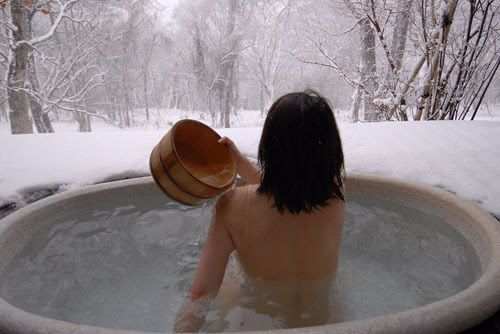
I'd climb Mount Fuji. I'd travel to Tokyo and hang out in little hole in the wall sushi bars, and stuff myself on sashimi and miso. I'd go to Akiharbara and comb through manga shops and feed my inner otaku. I'd spend way too much money in Baby the Stars Shine Bright. I'd visit Ueno Park, maybe in spring as the sakura are blooming.


After that it would be further south to Kyoto. I'd browse the old streets, hoping for a glimpse of my favourite geiko, Fukunao. Then I'd try to walk in her footsteps with a henshin make over; again, if time and money were no object, I'd be dressed as a maiko, then a geiko and finally, in the gigantic hair and kimono of a tayuu.


My final stop would be south to Okinawa to hang out on some beaches and hear some music, with a quick trip to the aquarium there. I've always wanted to see a whale shark up close.

Thursday, April 11, 2013
So close, yet so far away
Six more days of classes, 1 more clinical pathology quiz
and 9 finals. We had our first final exam on Monday - surgical lab
final. Ten minutes, five stations, two minutes at each and no going
back. I did pretty well, I think. My thumb got stuck as I was trying to
glove and I fiddled with it for what felt like forever, but still came
in before the buzzer. I nearly shit myself (metaphorically) when my
examiner's phone rang midway through doing a transfixating ligature - I
thought it was the timer at first! All in all, it could have been much
worse. I didn't stab myself. Or anyone else.
Next is anesthesia lab exam on Monday. That'll be sixteen stations, two minutes per station, and of course, no going back. Combination of demonstrate/explain and written work. I'm good with the fluid rate and drug calculations, and I'll be okay with IV catheters and ET intubation and the machine once I review it a bit more, but lord help me, the nerve blocks will be the death of me. And they've listed a bunch that no one ever practically uses! Dental blocks in dogs and cats, and paw blocks in cats, and epidurals in cattle are all well and good, but there's very rarely a need to do a nerve block on a cow's lower jaw, damnit!
This time of year is always weird. You're so close to the end - 21 days! But there's just so much shit to do that you might as well be buckling down for an 18 month transatlantic sea voyage. I just don't know where to start. That's not to say I haven't started reviewing at all, cause I have. Mostly I've been working on Mt Clinical Pathology. I made base camp at cytology. It's frustrating, because I really like clinical pathology. But there's just SO MUCH INFORMATION. "Overwhelming" doesn't seem to begin to describe it. "Uberwhelming" maybe. Yeah, I like that. "Uberwhelming".
Next is anesthesia lab exam on Monday. That'll be sixteen stations, two minutes per station, and of course, no going back. Combination of demonstrate/explain and written work. I'm good with the fluid rate and drug calculations, and I'll be okay with IV catheters and ET intubation and the machine once I review it a bit more, but lord help me, the nerve blocks will be the death of me. And they've listed a bunch that no one ever practically uses! Dental blocks in dogs and cats, and paw blocks in cats, and epidurals in cattle are all well and good, but there's very rarely a need to do a nerve block on a cow's lower jaw, damnit!
This time of year is always weird. You're so close to the end - 21 days! But there's just so much shit to do that you might as well be buckling down for an 18 month transatlantic sea voyage. I just don't know where to start. That's not to say I haven't started reviewing at all, cause I have. Mostly I've been working on Mt Clinical Pathology. I made base camp at cytology. It's frustrating, because I really like clinical pathology. But there's just SO MUCH INFORMATION. "Overwhelming" doesn't seem to begin to describe it. "Uberwhelming" maybe. Yeah, I like that. "Uberwhelming".
Sunday, March 10, 2013
Unusual teaching methods
I previously blogged about unusual study methods. Well, sometimes there's some unusual teaching methods too. Generally, these are the best. These are the methods that really jam it in a student's brain. Now, not all professors can pull these off and not all subjects lend themselves to bizarre demonstrations. But when they do, it stays with you.
Two brief examples:
A month or so ago, we were learning the life cycle of ick - it's got another name but I can't spell it. It's a fish parasite, common in fish tanks. (Yes, at AVC, we have mandatory classes on fish health. I think we may be the only school to require this, though I'm happy to be corrected). At the beginning of the following lecture, Dr S asked us to take out a piece of scrap paper and draw the life cycle of ick - after reassuring our neurotic vet student minds that we wouldn't be graded on this. There was a good reason why we wouldn't be graded on it, because after briefly reviewing the life cycle, he had us all ball up the papers and biff them at each other. "Now, chances are some of you got hit, and some of you didn't. That's how ick spreads." Suffice to say, we all remember ick. This same professor has had all sixty of us crowd into various sized hypothetical boxes to demonstrate stocking density in aquaculture.
The second example was actually from a complete different professor. Our therio professor is known for his animated teaching style - no one misses that lecture if they can help it. But he outdid himself this week. He rewrote the song Summertime to be about horse breeding, and then sang it live in front of the class (he's a surprisingly good singer). If only I'd thought copy down the lyrics!
So if you ever find yourself as a professor in the future, don't be afraid to be weird. Weird is memorable.
Two brief examples:
A month or so ago, we were learning the life cycle of ick - it's got another name but I can't spell it. It's a fish parasite, common in fish tanks. (Yes, at AVC, we have mandatory classes on fish health. I think we may be the only school to require this, though I'm happy to be corrected). At the beginning of the following lecture, Dr S asked us to take out a piece of scrap paper and draw the life cycle of ick - after reassuring our neurotic vet student minds that we wouldn't be graded on this. There was a good reason why we wouldn't be graded on it, because after briefly reviewing the life cycle, he had us all ball up the papers and biff them at each other. "Now, chances are some of you got hit, and some of you didn't. That's how ick spreads." Suffice to say, we all remember ick. This same professor has had all sixty of us crowd into various sized hypothetical boxes to demonstrate stocking density in aquaculture.
The second example was actually from a complete different professor. Our therio professor is known for his animated teaching style - no one misses that lecture if they can help it. But he outdid himself this week. He rewrote the song Summertime to be about horse breeding, and then sang it live in front of the class (he's a surprisingly good singer). If only I'd thought copy down the lyrics!
So if you ever find yourself as a professor in the future, don't be afraid to be weird. Weird is memorable.
Friday, March 1, 2013
Hell week
So, we wrote 4 midterms in a week this week. Anesthesia, Medicine, Clinical Pathology and Surgery. We're all pretty haggard, and exhausted. We're still technically in the Midterm Madness - one next week, one the week after and one the week after that. But one per week is practically a vacation after running the gauntlet like we did this week.
I'll flatly admit it - I don't like surgery. I don't really have any interest it, and it barely registers a blip on my radar. When it does register, my brain tends to go into a meltdown something to the effect of: HOLY SHIT! I AM GOING TO HAVE TO DO SURGERY IN SEPTEMBER! I AM GOING TO CUT OPEN A LIVING CREATURE, TAKE STUFF OUT AND CLOSE IT UP AND THE ANIMAL IS GOING TO LIVE!!! And then my conscious brain runs away screaming leaving my subconscious brain to watch Doctor Who clips on YouTube. It's a self-protective mechanism. Like a fugue state, but with more timey-wimey.
In fact, I'm something of an anomaly in that I felt way more confident going into the Clinical Pathology midterm than the Surgery midterm. Clinical Pathology is all about reading bloodwork. There's rules, and if you apply the rules and do a bit of problem solving, you get something approaching a diagnosis. I love this shit. I loved going over CBCs* and serum biochemistry reports when I worked in a clinic. The vets would look at a sheet of numbers and declare a diagnosis and I'd be jumping up and down like a Chihuahua on coffee trying to get them to explain it to me.
But surgery... Well at this point, we're just learning lists of stuff. Types of suture material. Suture patterns. Rules of asepsis. Methods of sterilization for equipment. Don't get me wrong, it's important stuff. It just doesn't interest me all that much. So needless to say, studying for it was a bit painful. Luckily, it's over, and it's not a cumulative final. It actually wasn't bad.
Anesthesia killed me last week. Everything I thought I knew about induction drugs? Yeah, she asked everything else. I'm hoping I redeemed myself on the "diagram and explain" type questions about breathing circuits and equipment. My vaporizer diagram was like the work of an artist. Assuming that artist was Picasso in his later stages, so that it kind of looked like a vaporizer if you tilted your head and squinted. But I labelled everything right and explained how it worked, and that's the important bit right? I'm in vet school, not art school!
*That's complete blood count, not Canadian Broadcasting Corporation; though I do love Hockey Night In Canada.
I'll flatly admit it - I don't like surgery. I don't really have any interest it, and it barely registers a blip on my radar. When it does register, my brain tends to go into a meltdown something to the effect of: HOLY SHIT! I AM GOING TO HAVE TO DO SURGERY IN SEPTEMBER! I AM GOING TO CUT OPEN A LIVING CREATURE, TAKE STUFF OUT AND CLOSE IT UP AND THE ANIMAL IS GOING TO LIVE!!! And then my conscious brain runs away screaming leaving my subconscious brain to watch Doctor Who clips on YouTube. It's a self-protective mechanism. Like a fugue state, but with more timey-wimey.
In fact, I'm something of an anomaly in that I felt way more confident going into the Clinical Pathology midterm than the Surgery midterm. Clinical Pathology is all about reading bloodwork. There's rules, and if you apply the rules and do a bit of problem solving, you get something approaching a diagnosis. I love this shit. I loved going over CBCs* and serum biochemistry reports when I worked in a clinic. The vets would look at a sheet of numbers and declare a diagnosis and I'd be jumping up and down like a Chihuahua on coffee trying to get them to explain it to me.
But surgery... Well at this point, we're just learning lists of stuff. Types of suture material. Suture patterns. Rules of asepsis. Methods of sterilization for equipment. Don't get me wrong, it's important stuff. It just doesn't interest me all that much. So needless to say, studying for it was a bit painful. Luckily, it's over, and it's not a cumulative final. It actually wasn't bad.
Anesthesia killed me last week. Everything I thought I knew about induction drugs? Yeah, she asked everything else. I'm hoping I redeemed myself on the "diagram and explain" type questions about breathing circuits and equipment. My vaporizer diagram was like the work of an artist. Assuming that artist was Picasso in his later stages, so that it kind of looked like a vaporizer if you tilted your head and squinted. But I labelled everything right and explained how it worked, and that's the important bit right? I'm in vet school, not art school!
*That's complete blood count, not Canadian Broadcasting Corporation; though I do love Hockey Night In Canada.
Friday, February 15, 2013
The Walking Dead
No, I don't mean my classmates - though ask me again at the end in a few weeks as we finish up yet another round of midterms.
To a certain extent, I mean me. I do apologize for my absence, dear readers. For awhile, I didn't have much interesting to talk about, and then I felt bad about updating after so long away (like that awkward moment when you have to finally reply to an email weeks and weeks after you got it...)... But, figured I'd put on the big girl panties and return from the dead.
So, we're starting to learn the ins and outs of surgery. Personally, I am scared shitless about surgery. It seems once per lecture (at least), we're reminded of some new way we can possibly kill our patients. Not to mention that all surgical instruments look like torture instruments. (Or home improvement implements...)
Exhibit A: Finochietto rib retractor

As a bonus, it even squeaked in a wonderfully macabre way. As we're staring at a positively terrifying array of surgical instruments, a friend happily points to the rib retractor and proclaims, "Finochietto. And I only know that because it was in a game I played."
Being a video game geek myself, I stared blankly at him for a minute before saying, "Okay, you can't say that and then NOT say what game it was."
"The Walking Dead." And then, before my imagination could really run away from me (I don't like zombies...), he added "You use it to open a door."
So there you have it. It's the Swiss Army knife of surgical tools. Holds open ribs, terrifies small children (and according to another classmate, anyone who saw the movie "Hostel") and in a pin, can wedge open a stubborn stuck door.
To a certain extent, I mean me. I do apologize for my absence, dear readers. For awhile, I didn't have much interesting to talk about, and then I felt bad about updating after so long away (like that awkward moment when you have to finally reply to an email weeks and weeks after you got it...)... But, figured I'd put on the big girl panties and return from the dead.
So, we're starting to learn the ins and outs of surgery. Personally, I am scared shitless about surgery. It seems once per lecture (at least), we're reminded of some new way we can possibly kill our patients. Not to mention that all surgical instruments look like torture instruments. (Or home improvement implements...)
Exhibit A: Finochietto rib retractor
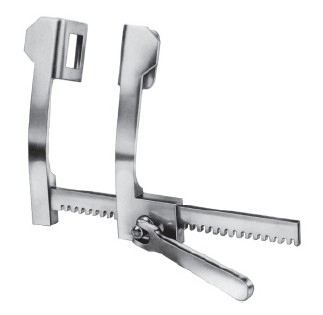
As a bonus, it even squeaked in a wonderfully macabre way. As we're staring at a positively terrifying array of surgical instruments, a friend happily points to the rib retractor and proclaims, "Finochietto. And I only know that because it was in a game I played."
Being a video game geek myself, I stared blankly at him for a minute before saying, "Okay, you can't say that and then NOT say what game it was."
"The Walking Dead." And then, before my imagination could really run away from me (I don't like zombies...), he added "You use it to open a door."
So there you have it. It's the Swiss Army knife of surgical tools. Holds open ribs, terrifies small children (and according to another classmate, anyone who saw the movie "Hostel") and in a pin, can wedge open a stubborn stuck door.
Friday, November 16, 2012
I almost failed home ec
Okay, I realize that's a weird intro for any blog about vet school, but hear me out.
In sixth grade (Or was it seventh? Maybe eighth? I forget. Sometime around there) we had a course called home economics. I think most schools had it. It was supposed to be life skills. What it was in actuality was baking and sewing. I loved the baking part of it. I'd been baking and cooking with my parents since I was old enough to hold a spoon. I was decidedly not good at sewing. (You're starting to see where this is going, huh?) We had to sew a stuffed animal by hand and make a pair of boxer shorts on a sewing machine. I could stitch by hand, but it wasn't all that neat, mostly I think because I didn't care. Sewing machines were a weapon of mass destruction in my hands. I can vividly remember this conversation between the teacher and me when she saw how far behind I was.
Her: "You have to know how to sew."
Me: "No I don't."
Her: "Well what about when your husband needs his pants hemmed?"
Me: "Why can't he do it himself? Or use a tailor? Or buy pants that fit in the first place? And who says I'm getting married?"
I don't remember how it went from there. I think she decided I was a lost cause on the path to Stepford Wife-dom and walked away in disgust. I passed the class, mostly on my efforts in the kitchen. Neither the stuffed animal or the boxer shorts ever got finished. Luckily, my geek-tastic love of cosplay forced me to learn to stitch acceptably by hand, because little did I know, I'd end up stitching skin one day. On Tuesday during a lab, I had my first attempt at sutures. It wasn't particularly neat, or fast, but the end product wasn't horrible. Of course, all those years ago, when my teacher had told me I'd need to sew, she probably should have left my hypothetical idiot husband's pants out of it and used something more relevant like stopping the post-surgery evisceration of a patient. And then she should have ditched the sewing machine and given me forceps and needle drivers.
In sixth grade (Or was it seventh? Maybe eighth? I forget. Sometime around there) we had a course called home economics. I think most schools had it. It was supposed to be life skills. What it was in actuality was baking and sewing. I loved the baking part of it. I'd been baking and cooking with my parents since I was old enough to hold a spoon. I was decidedly not good at sewing. (You're starting to see where this is going, huh?) We had to sew a stuffed animal by hand and make a pair of boxer shorts on a sewing machine. I could stitch by hand, but it wasn't all that neat, mostly I think because I didn't care. Sewing machines were a weapon of mass destruction in my hands. I can vividly remember this conversation between the teacher and me when she saw how far behind I was.
Her: "You have to know how to sew."
Me: "No I don't."
Her: "Well what about when your husband needs his pants hemmed?"
Me: "Why can't he do it himself? Or use a tailor? Or buy pants that fit in the first place? And who says I'm getting married?"
I don't remember how it went from there. I think she decided I was a lost cause on the path to Stepford Wife-dom and walked away in disgust. I passed the class, mostly on my efforts in the kitchen. Neither the stuffed animal or the boxer shorts ever got finished. Luckily, my geek-tastic love of cosplay forced me to learn to stitch acceptably by hand, because little did I know, I'd end up stitching skin one day. On Tuesday during a lab, I had my first attempt at sutures. It wasn't particularly neat, or fast, but the end product wasn't horrible. Of course, all those years ago, when my teacher had told me I'd need to sew, she probably should have left my hypothetical idiot husband's pants out of it and used something more relevant like stopping the post-surgery evisceration of a patient. And then she should have ditched the sewing machine and given me forceps and needle drivers.
Wednesday, October 31, 2012
Jello flavours that didn't make the cut
Grape and beef liver and cherry and beef kidney. Yum.
No, these were not for eating (to state the obvious). We were using them to practice biopsies and fine needle aspirates using ultrasound. I may have mentioned before that I'm terrified of ultrasound. Like, it might as well be alien technology (hm, maybe I should have stayed in my costume...). But that's no reason to avoid it. If anything that's more reason to work with it as much as possible.
I was lucky to get my name drawn to do the biopsy/FNA wetlab this afternoon. Of course, it's Halloween, so that meant quickly changing out of my 11th Doctor costume before running down to the radiology department. After a brief introduction to the equipment, the vet guided us one on one in taking a biopsy of a bovine kidney buried in grape jello. It was dark enough that you couldn't cheat by looking for the kidney, and I actually surprised myself with how kidney-ish the kidney looked on the screen. Granted, jello is an almost perfect medium for conducting ultrasound because there's nothing in it, and it's uniform densitty and it conducts the sound waves really well. But I could see the needle on the screen going into it and felt the "pop" when I hit the capsule, and managed to get a sample. Very cool. The vet compared it to playing video games. Always knew my Final Fantasy obsession would pay off. See, you're watching the screen. Your non-dominant hand (left for me) is holding the ultrasound probe, your dominant hand is holding the biopsy gun. (You could do it the other way, but I agreed with the vet when she said, "If I'm going to be stabbing an animal, I'd rather do it with the hand I have the most control with." Wise words.) Is it easy? Oh lord no. I found out my left hand likes to think for itself, because it kept wanting to drift around. Next thing I know, I can't find my needle on the screen because the probe is now an inch away from it. Stupid left hand.
Then it was on my own for fine needle aspirate. You're taking a smaller sample, so you just use a normal needle with a syringe. I'd been practicing pulling back a plunger with one hand, and figured I was getting pretty good at it. So I poke into the cherry jello, down into the kidney, and flick my thumb to pull back the plunger and take a sample. Yeah, you didn't really believe that, did you? The bloody plunger wouldn't budge. After trying it one handed (the correct way) for a few minutes, and therefore, looking like an idiot for a few minutes (luckily, just in front of my peers, not in front of the vet), I finally had to give up and adjust my grip to get a sample. Lesson learned, I have weak puny thumbs.
As a bonus, the vet told us we were welcome to use the jello for a few weeks while it was still good and we could come down after hours to use the portable ultrasound machine to practice. I plan on doing this. I also plan on embarking on an intense strength training program for my thumb.
No, these were not for eating (to state the obvious). We were using them to practice biopsies and fine needle aspirates using ultrasound. I may have mentioned before that I'm terrified of ultrasound. Like, it might as well be alien technology (hm, maybe I should have stayed in my costume...). But that's no reason to avoid it. If anything that's more reason to work with it as much as possible.
I was lucky to get my name drawn to do the biopsy/FNA wetlab this afternoon. Of course, it's Halloween, so that meant quickly changing out of my 11th Doctor costume before running down to the radiology department. After a brief introduction to the equipment, the vet guided us one on one in taking a biopsy of a bovine kidney buried in grape jello. It was dark enough that you couldn't cheat by looking for the kidney, and I actually surprised myself with how kidney-ish the kidney looked on the screen. Granted, jello is an almost perfect medium for conducting ultrasound because there's nothing in it, and it's uniform densitty and it conducts the sound waves really well. But I could see the needle on the screen going into it and felt the "pop" when I hit the capsule, and managed to get a sample. Very cool. The vet compared it to playing video games. Always knew my Final Fantasy obsession would pay off. See, you're watching the screen. Your non-dominant hand (left for me) is holding the ultrasound probe, your dominant hand is holding the biopsy gun. (You could do it the other way, but I agreed with the vet when she said, "If I'm going to be stabbing an animal, I'd rather do it with the hand I have the most control with." Wise words.) Is it easy? Oh lord no. I found out my left hand likes to think for itself, because it kept wanting to drift around. Next thing I know, I can't find my needle on the screen because the probe is now an inch away from it. Stupid left hand.
Then it was on my own for fine needle aspirate. You're taking a smaller sample, so you just use a normal needle with a syringe. I'd been practicing pulling back a plunger with one hand, and figured I was getting pretty good at it. So I poke into the cherry jello, down into the kidney, and flick my thumb to pull back the plunger and take a sample. Yeah, you didn't really believe that, did you? The bloody plunger wouldn't budge. After trying it one handed (the correct way) for a few minutes, and therefore, looking like an idiot for a few minutes (luckily, just in front of my peers, not in front of the vet), I finally had to give up and adjust my grip to get a sample. Lesson learned, I have weak puny thumbs.
As a bonus, the vet told us we were welcome to use the jello for a few weeks while it was still good and we could come down after hours to use the portable ultrasound machine to practice. I plan on doing this. I also plan on embarking on an intense strength training program for my thumb.
Friday, October 26, 2012
Of course, that was completely intentional
Today we did physical exams of lab animals. Mostly mice and rats. More rats than mice, actually. Lab mice are hateful little buggers and will try to bite you at every available opportunity. Right up there with budgies. Rats are adorable little cuddle monsters though. At least the ones at school are. There isn't a lot to a physical exam on a rat. Temperature, respiration and heart rate are all pretty much impossible to take. A lot of it is palpation and visual inspection.
The rat pooped on my classmate who went first. It landed on the table, luckily. No big deal, it comes with the territory! But that doesn't mean it was fun, so I was glad the rat got it out of his system, litterally. I took my turn, scooping him up and talking baby talk to him while I looked at his eyes, nose, ears... "Oh you are so COOOT! Look at your little nose, I could just cuddle you all day!" I plunk his butt on the table so I can hold him under the front legs with one hand and palpate his abdomen with the other. My hands are small, and I can't quite do it without using the table as a stabilizer. This turned out to be lucky.
Thirty second later, I noticed a puddle on the table.
As I'm finishing up my exam, the vet/professor comes over to see how we're doing and if we have any questions. "Wow, you got a urine sample, that's awesome!" He's kind of dead pan at the best of times, so I'm not sure if he's mocking me, so I laugh it off and hand the rat off to another classmate and go to wash my hands. The vet comes rushing back with a syringe to draw up the urine off the table, and asks us if we think it's normal looking. After a little session of Rat Pee for Dummies, he says, "Good job on the urine." Again, not sure if he's kidding, I replied "Oh, yeah, I totally meant to do that" in my best sarcastic voice to show I'm completely joking. "No, really, it's good. Usually they just pee on you. Well done for not getting wet!"
Yep. Today I got an A+ in Not Getting Peed On 101. It's a required course in vet school. It's 5% reflexes, 10% knowing animal body language, and 85% luck.
The rat pooped on my classmate who went first. It landed on the table, luckily. No big deal, it comes with the territory! But that doesn't mean it was fun, so I was glad the rat got it out of his system, litterally. I took my turn, scooping him up and talking baby talk to him while I looked at his eyes, nose, ears... "Oh you are so COOOT! Look at your little nose, I could just cuddle you all day!" I plunk his butt on the table so I can hold him under the front legs with one hand and palpate his abdomen with the other. My hands are small, and I can't quite do it without using the table as a stabilizer. This turned out to be lucky.
Thirty second later, I noticed a puddle on the table.
As I'm finishing up my exam, the vet/professor comes over to see how we're doing and if we have any questions. "Wow, you got a urine sample, that's awesome!" He's kind of dead pan at the best of times, so I'm not sure if he's mocking me, so I laugh it off and hand the rat off to another classmate and go to wash my hands. The vet comes rushing back with a syringe to draw up the urine off the table, and asks us if we think it's normal looking. After a little session of Rat Pee for Dummies, he says, "Good job on the urine." Again, not sure if he's kidding, I replied "Oh, yeah, I totally meant to do that" in my best sarcastic voice to show I'm completely joking. "No, really, it's good. Usually they just pee on you. Well done for not getting wet!"
Yep. Today I got an A+ in Not Getting Peed On 101. It's a required course in vet school. It's 5% reflexes, 10% knowing animal body language, and 85% luck.
Tuesday, October 23, 2012
WTF Moments and Mental Black Holes
It's guaranteed that at least once during an exam, I will have one of the above. There's an important difference between the two, but they're equally frustrating.
A "WTF moment" happens when you encounter a question about something you're positive you've never seen in your life. Maybe you zoned out in class, or maybe it was at the bottom of a page and you skipped over it, maybe your cat fell off a table and distracted you while you were reading it. In any case, it's there on the exam and it may as well be written in Ancient North Martian. WTF Moments require you to do nothing but full on guess. Maybe you can extrapolate an answer based on something else you know, but sometimes you just circle C. Yesterday, it was Diagnostic Imaging. I was flying through it confidently until I hit a brick wall. That wall had a sign on it that said: "At what point in gestation does fetal ossification happen in the dog?"
I think I actually heard crickets in my own head when I read that. My brain looked at it and said, "Okay hand, you're on your own. Just pick something." It was in our notes, I later found out. We have Powerpoints and Word documents, and usually they're pretty similar. Unfortunately, the Powerpoints totally failed to mention fetal ossification and I hadn't read the Word documents.... My bad. I picked C. It was wrong.
Mental Black Holes are a totally non-understood phenomenon. You read something. You reread something. You reread it a third, then a fourth time. Thirty seconds later, and... it's gone. It doesn't matter how many times you try to memorize some trivial little detail, you can't. There's no rhyme or reason to why it happens. This cropped up on Bacteriology last week. It was a matching question. I had it down to Burkholderia mallei and Burkholderia pseudomallei. One causes glanders in horses, one causes melioidosis in humans. I'd like to point out this is the second time I've learned these. I had them on another exam for a Medical Bacteriology course a few years ago. You'd think after getting it wrong back then, I'd get it right this time. No such luck. My brain refuses to accept that B. mallei causes glanders. "I reject your reality and substitute my own". In my brain's version of reality, B. mallei causes melioidosis, because M goes with M and that's nice and easy to remember. I even tried during the exam to say, "Okay, so it's the opposite of what I think it is." But then I managed to talk myself into thinking that I thought that B. mallei caused glanders, so therefore, it causes melioidosis.
I looked it up when I finished the exam. I won't pretend I didn't bang my head against my locker door a few times.
A "WTF moment" happens when you encounter a question about something you're positive you've never seen in your life. Maybe you zoned out in class, or maybe it was at the bottom of a page and you skipped over it, maybe your cat fell off a table and distracted you while you were reading it. In any case, it's there on the exam and it may as well be written in Ancient North Martian. WTF Moments require you to do nothing but full on guess. Maybe you can extrapolate an answer based on something else you know, but sometimes you just circle C. Yesterday, it was Diagnostic Imaging. I was flying through it confidently until I hit a brick wall. That wall had a sign on it that said: "At what point in gestation does fetal ossification happen in the dog?"
I think I actually heard crickets in my own head when I read that. My brain looked at it and said, "Okay hand, you're on your own. Just pick something." It was in our notes, I later found out. We have Powerpoints and Word documents, and usually they're pretty similar. Unfortunately, the Powerpoints totally failed to mention fetal ossification and I hadn't read the Word documents.... My bad. I picked C. It was wrong.
Mental Black Holes are a totally non-understood phenomenon. You read something. You reread something. You reread it a third, then a fourth time. Thirty seconds later, and... it's gone. It doesn't matter how many times you try to memorize some trivial little detail, you can't. There's no rhyme or reason to why it happens. This cropped up on Bacteriology last week. It was a matching question. I had it down to Burkholderia mallei and Burkholderia pseudomallei. One causes glanders in horses, one causes melioidosis in humans. I'd like to point out this is the second time I've learned these. I had them on another exam for a Medical Bacteriology course a few years ago. You'd think after getting it wrong back then, I'd get it right this time. No such luck. My brain refuses to accept that B. mallei causes glanders. "I reject your reality and substitute my own". In my brain's version of reality, B. mallei causes melioidosis, because M goes with M and that's nice and easy to remember. I even tried during the exam to say, "Okay, so it's the opposite of what I think it is." But then I managed to talk myself into thinking that I thought that B. mallei caused glanders, so therefore, it causes melioidosis.
I looked it up when I finished the exam. I won't pretend I didn't bang my head against my locker door a few times.
Wednesday, October 17, 2012
Stream of consciousness
With two midterms this week, one last week and two more next week, we're all just a little out to lunch lately. We're all sleep deprived and giddy. Here are just a few of the thoughts streaming through my head.
Why do we have this giant list of antiviral drugs, when they're barely used in vet med?
E coli is hot stripper pink on MacConkey agar.
Citrobacter rodentium causes EPEC like disease in mice and gerbils. Like laboratory mice. Their genes have been spliced. They're Pinky, they're Pinky and the Brain, Brain, Brain, Brain....
Why is my cat on my shoulder?
Everything causes mastitis. Never look at a cow funny, it'll get mastitis.
Everything causes cancer. Or diarrhea. Those are the options.
So, equine papillomavirus causes papillomas in horses. But equine papillomatosus is caused by bovine papillomavirus. But it's also caused equine sarcoids. Shouldn't equine papillomavirus cause equine papillomatosis? Who names these things?!
PWMS, PRRSV, FeLV, FeSV, CPV-1, CAV-2, ICH, ICTB, E-I-E-I-O....
HERPES! Thank god it's herpes! (This wasn't me, it was a classmate rejoicing at finally getting through the retrovirus section.)
Greasy pig disease... Sounds kinda tasty, actually. Like bacon.
Yersinia pestis is carried by- KUROMI! YOU ARE BLOCKING MY VIEW! GET BACK ON MY SHOULDER!
I'm starting to see a pattern in treatment... 99% of the time, you're either going to give it penicillin or kill it.

----
Why in the hell do oysters need a whole virus family all to themselves?! Damn greedy oysters. Why do we have this giant list of antiviral drugs, when they're barely used in vet med?
E coli is hot stripper pink on MacConkey agar.
Citrobacter rodentium causes EPEC like disease in mice and gerbils. Like laboratory mice. Their genes have been spliced. They're Pinky, they're Pinky and the Brain, Brain, Brain, Brain....
Why is my cat on my shoulder?
Everything causes mastitis. Never look at a cow funny, it'll get mastitis.
Everything causes cancer. Or diarrhea. Those are the options.
So, equine papillomavirus causes papillomas in horses. But equine papillomatosus is caused by bovine papillomavirus. But it's also caused equine sarcoids. Shouldn't equine papillomavirus cause equine papillomatosis? Who names these things?!
PWMS, PRRSV, FeLV, FeSV, CPV-1, CAV-2, ICH, ICTB, E-I-E-I-O....
HERPES! Thank god it's herpes! (This wasn't me, it was a classmate rejoicing at finally getting through the retrovirus section.)
Greasy pig disease... Sounds kinda tasty, actually. Like bacon.
Yersinia pestis is carried by- KUROMI! YOU ARE BLOCKING MY VIEW! GET BACK ON MY SHOULDER!
I'm starting to see a pattern in treatment... 99% of the time, you're either going to give it penicillin or kill it.
----
....So that pretty much sums up where I am these days. Of course, sometimes, if you're lucky, you find out your professors are more or less on the same page. Today, it was our bacteriology professor. I'll leave you with this gem: "Erysipelothrix rhusiopathiae... It really does just roll off the tongue. It's very calming to say, it's like bacterial valium. I can almost picture a yogi, sitting on a mountaintop, chanting it....and levitating."
Subscribe to:
Posts (Atom)